Scroll through your phone right now. Not the home screen — the full list, the one you never open. Forty-seven apps, maybe more. You downloaded some of them for a specific moment — a trip, a project, a recipe you made once — and they've been sitting there ever since, taking up space you can't see and attention you can't get back. 📱
Here's the thing nobody tells you about digital clutter: it's not the storage that costs you. You have plenty of storage. It's the notifications, the background updates, the tiny little red badges that make you feel like something needs you when nothing does. It's the thirty seconds you spend looking for the one app you actually need, past the twenty you don't. That's the real cost — not the gigabytes, but the attention.
And it's not just the apps you don't use. It's the ones you use too much. The one that was supposed to save you time and instead became the place you lose your Tuesday afternoon. The one that connects you to everyone and leaves you feeling like you've talked to nobody. Your phone is supposed to be a tool. A lot of the time, it's running you.

I see this constantly when I look at how women's days actually run. The phone is the first thing that touches your hand in the morning and the last thing you see at night. It holds your calendar, your bank, your maps, your people. And it also holds forty-seven things that don't serve you, all of them designed by somebody whose job is to make you open them. That's not a neutral object. That's a space somebody else is renting in your head.
The nine that matter
Here's the reframe that makes this easy. You don't need forty-seven apps. You need nine. Maybe twelve if you count the ones that are genuinely useful but situational — the airline app you use twice a year, the parking app for the city you visit. The point isn't a number. The point is that every app on your phone should earn its place by being something you use, not something you downloaded and forgot.
So here's the first step, and it takes about five minutes. Open your app list. Sort by last used. Anything you haven't opened in thirty days — and you know you haven't, because you can feel it — delete it. Not archive it. Not hide it in a folder. Delete it. If you need it again in six months, you'll download it again in thirty seconds. That's not a loss. That's a system.
The second step is harder. Look at the apps you do use. The ones that take more than they give. The one that was supposed to help you manage your money and instead makes you feel anxious every time you open it. The one that was supposed to help you sleep and instead has you scrolling at midnight. Those need to go too, and it's harder because they came with good intentions. But good intentions don't make a tool useful. 💅🏾
What to keep, what to let go
Here's my rule of thumb, and it's served me well. Keep the app if it does one of three things: it saves you real time every week, it connects you to people you actually want to hear from, or it does something you genuinely cannot do any other way. Everything else is a maybe, and maybes don't belong on your home screen.
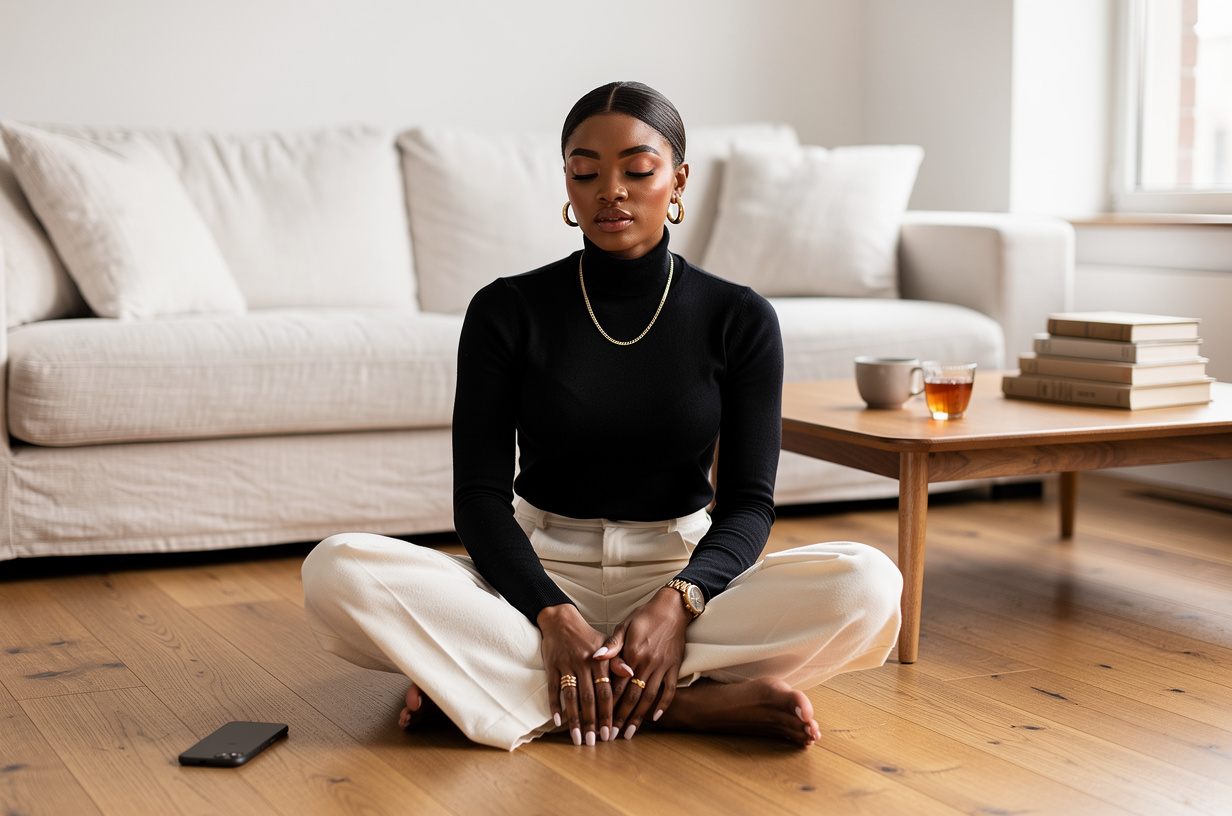
The banking app stays. The maps app stays. The messaging app that holds your family group chat stays. The meditation app you actually use stays. The one you downloaded for a seven-day challenge in January and haven't opened since — that goes. The one that sends you a notification every four hours to remind you to drink water — you have a body that tells you when you're thirsty. That goes too. 🌿
And here's the part that feels strange at first but becomes freeing: you're allowed to miss things. You're allowed to not be on the platform where everybody is sharing their lives. You're allowed to find out about the event tomorrow instead of right now. The world will not end because you weren't watching it happen in real time. In fact, you might find that your life gets a little quieter and a lot more yours.
The twenty-minute reset
So here's the full practice, and it takes about twenty minutes total. First, delete the apps you haven't used in thirty days. Second, turn off notifications for everything that isn't a person — no app needs to interrupt your day except the people in it. Third, move the apps you're keeping but don't need quick access to — the airline app, the parking app, the one you use once a month — into a folder on your second screen. Your home screen should hold what you use daily, and nothing else.
Fourth, and this is the one that changes everything: put your phone in another room for one hour a day. Not forever. Not as a punishment. Just one hour where you're not reachable and nothing bad happens. You'll be amazed at how quickly you remember that you were fine before you had a computer in your pocket, and that you're still fine now. The anxiety of being unreachable is real, and it's also mostly invented. 🤍
I see this constantly — women who are exhausted by their own phones and can't work out why, because they're not doing anything wrong. They're just carrying forty-seven things when they need nine. The phone is supposed to make life softer. When it's full of things that don't serve you, it does the opposite. The declutter isn't about being minimal. It's about making room for what actually matters.
The takeaway
This week, open your app list, sort by last used, and delete everything you haven't opened in thirty days. Then turn off notifications for every app that isn't a person. That's it. Two steps, twenty minutes, and your phone goes from something that runs you to something that works for you.
A soft life isn't built from one grand fix. It's built from a dozen small decisions you stop having to make every week, until one Sunday you realize your phone is quiet and your mind is somewhere else entirely. 💅🏾