
It's 7:12 on a Thursday morning. Shoes are on, mostly. Lunch is packed. And your baby looks up at you from the doorway and says, "Mommy, I need the form for the field trip. It's today." 😩
You know the email. You can almost see it. It came in sometime in the last two weeks, sandwiched between the PTA newsletter, the lunch account reminder, the spirit week schedule, a teacher's welcome-back note from August that somebody replied-all to, and the reminder about the reminder. You scroll. You search "field trip." You find it, print it in a panic, sign it on the hood of the car and get to the drop-off line with four minutes and none of your peace left.
You are not careless. You are the only filter that school email has. And that's a job a system can do better than you at 7 a.m.

It's not that you weren't paying attention
Here's what's actually happening. A typical school sends a steady stream of messages from a handful of different places: the district, the school office, the PTA, each teacher, the after-school program, the sports coach, the lunch system. Every one of them thinks its email is the important one. Maybe one in ten actually needs you to do something.
That's what systems people call a signal-to-noise problem. When nine messages are noise and one is signal, and they all look the same in your inbox, your brain does the reasonable thing: it starts skimming. Skimming is how you survive the noise. It's also exactly how the one form that mattered slipped past.
There's a second cost underneath it, too. Every time you open one of those emails and decide "not now," you've made a tiny decision. Make forty of those a week and you've spent real mental energy just sorting, before you've done a single thing on the list. That's decision fatigue, and it's why the school inbox can wear you out by Wednesday.
And none of those senders talk to each other. The district doesn't know the PTA just emailed. The teacher doesn't know the office sent the same reminder yesterday. Some of it comes by email, some through a school app, some on a paper flyer balled up at the bottom of a backpack. Every channel was built by somebody solving their own problem, and the only place they all meet is you. That's not a communication plan. That's a pile, and you've been handed the shovel.
You aren't forgetting things. You're filtering a firehose by hand, at 7 a.m., with one shoe on.
Why it lands on us
Let's be honest about who usually holds this. In most households, the school email goes to one parent, and the follow-through lives in one head. More often than not, it's Mama's. The other parent may be wonderful and fully willing, but if the information only arrives in your inbox, the job arrived there with it.
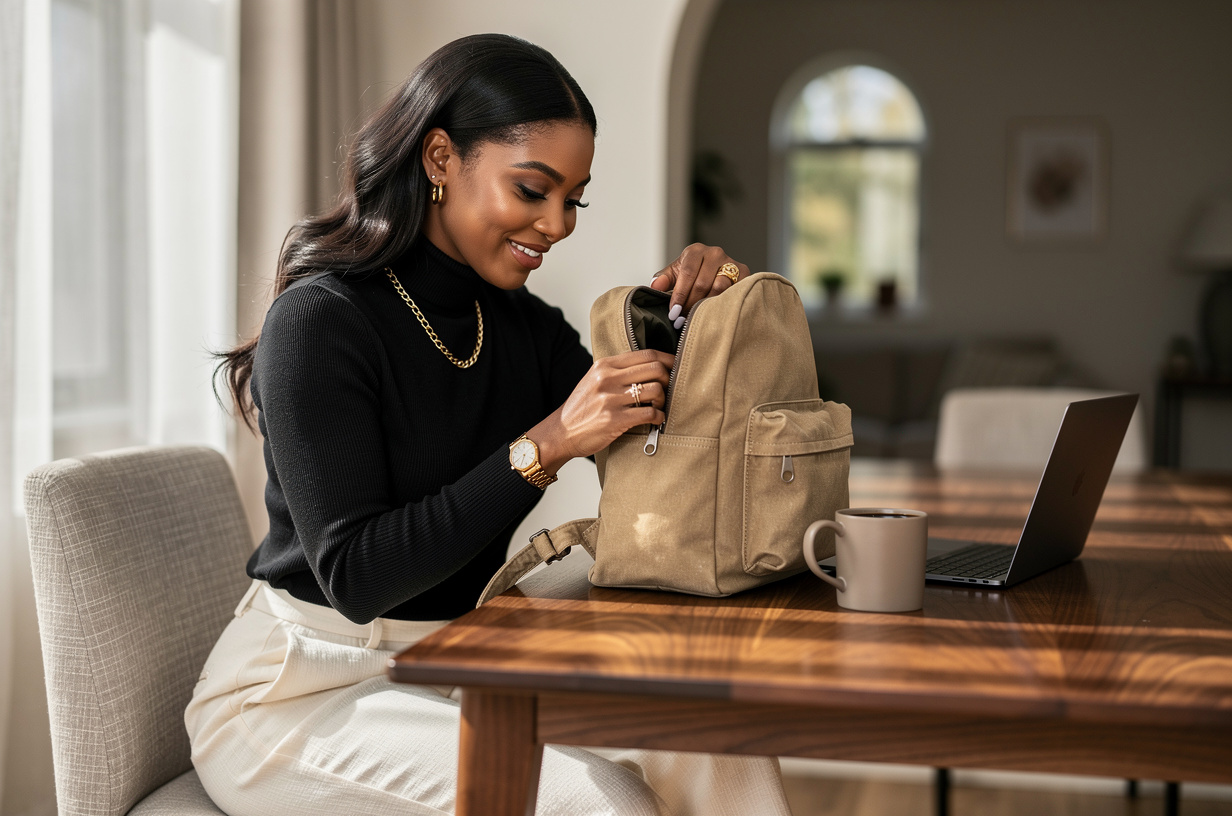
And for a lot of Black mothers, school logistics are never only logistics. We're the ones reading the fine print on the discipline policy, showing up to the conference prepared, making sure our children are seen accurately in rooms that don't always see them that way. That vigilance is love. It's also a full second shift, and it doesn't leave much room for hunting down a permission slip.
I see this constantly when I look at how a household actually runs. The family has a beautiful shared photo album and a group chat with three hundred messages a day, but the school, the one thing with real deadlines, lives entirely in one person's personal inbox. Nobody designed it that way. It just landed there and stayed.
And because it's invisible, it rarely gets thanked or shared. Nobody sees the forty emails you sorted this week. They only see the one you missed. That's a rough scorecard for anybody, and it's one you never agreed to keep.
So here's a question for you: if you were out of town for a week, who in your house would know what the school needed?
Build one quiet lane for school
1️⃣ Give school its own folder, automatically. Almost every email program lets you make a rule: messages from certain senders skip the main inbox and go straight to a folder or label. Add the school's addresses, the teachers, the PTA and the district. Now school mail stops interrupting your workday and waits for you in one place, and nothing else can bury it. 📁
2️⃣ Do one ten-minute sweep on Sunday. Coffee in hand, open the school folder once a week and pull out only what needs action: forms, payments, dates, things to buy. Write them on one short list. Everything else — the newsletters, the photos, the reminders — you can read whenever, or never. One sweep beats forty glances.
3️⃣ Put every date on a shared family calendar the moment you see it. Picture day, early dismissal, the field trip, the science fair. A shared calendar means the other parent, the grandparent who does Tuesday pickups and the sitter can all see it on their own phones. The information stops living only in your inbox, and so does the job. 📅
4️⃣ Keep one school note for everything you look up twice. The lunch account login, the teacher's email, the after-school program's number, the class parent's name, your child's student ID. One note, shared with whoever co-parents. The next time someone asks "what's the password for the lunch thing," the answer is two taps away and it doesn't have to be you.
5️⃣ Turn down the volume on what's optional. Unsubscribe from the lists you never read, like the district newsletter you can always find on the website, and switch the school app's alerts to the essentials only. Fewer messages coming in means the ones that remain actually get read. 🔕
None of this asks you to care less. It asks the system to carry the part that doesn't need your heart, so your heart can go to the parts that do.
If your children move between two homes, this matters double. A shared calendar and a shared school note mean both houses are working from the same information, so the field trip form isn't something one parent has to remember to tell the other. It quietly removes a whole category of "you didn't tell me" conversations, and that's peace for everybody, the kids included.
The takeaway
Tonight, make one rule that sends the school's emails into their own folder. This Sunday, do the first ten-minute sweep and put three dates on a shared calendar. Twenty minutes, total, and most of it happens once. Next Thursday at 7:12, the form is already signed and sitting in the backpack. ✨
Soft life isn't a house where nothing ever comes up. It's a house where the important things have a place to land, so you're not the one catching all of them. 💅🏾