
Your phone is on the sofa, or in the back of a cab, or in the pocket of a jacket you wore once in September. It has been gone four hours. Four. And you did not really panic, because you have a very specific and completely unearned feeling about how covered you are. 🔐
That feeling is real. It is also not attached to anything. Somewhere in your settings there is a service that would help you find that phone, and you have never opened it, never switched it on, never signed in, and never checked whether it works. You own the thing. Owning it was the entire job you thought there was.
This is not a technology problem, and I want to be precise about that, because it gets diagnosed as one constantly. Your phone is not old. Your account is not broken. There is no setting you are failing at. There is a system you have never turned on, and you have been paying the premium on it for two years without knowing it. 💅🏾

The completion illusion, one more time
You know the capability exists, and knowing it exists feels identical to having it. So the loop closes and nothing is ever checked — not once, not in two years, not on the morning you actually need it. The relief was delivered the day you bought the phone. The actual coverage is optional, and you have been treating it as though it arrived in the box. 📱
They want you to call this being safety-conscious. I think that's wrong, and I think it's expensive in a specific way, because it means you keep buying things that reassure you instead of switching on the three you already own.
A safety feature you never activated is not a safety feature. It is a receipt for a decision you never made.
What actually happens when you finally need it
First: the toggle is off by default on a lot of devices, and turning it on is not one tap. It is a sign-in, a second device or a recovery email, a permission, and a confirmation. Nobody does four steps on a day they are feeling fine. 📲
Second: even once it is on, most people leave it showing the last known location instead of live. Last known on a phone that has not moved in three hours tells you what is true, not what is happening. It is a receipt, not a location — once again the exact shape of the feeling you had before you turned anything on. 🧰
Third, and this is the one that quietly ruins it for everybody: lost mode needs a network and a battery. A phone that is off, flat, on a lapsed plan, or in a building with no signal reports nothing at all. So the system built to remove the panic hands it straight back in precisely the three situations you would most want it to work. 🔍
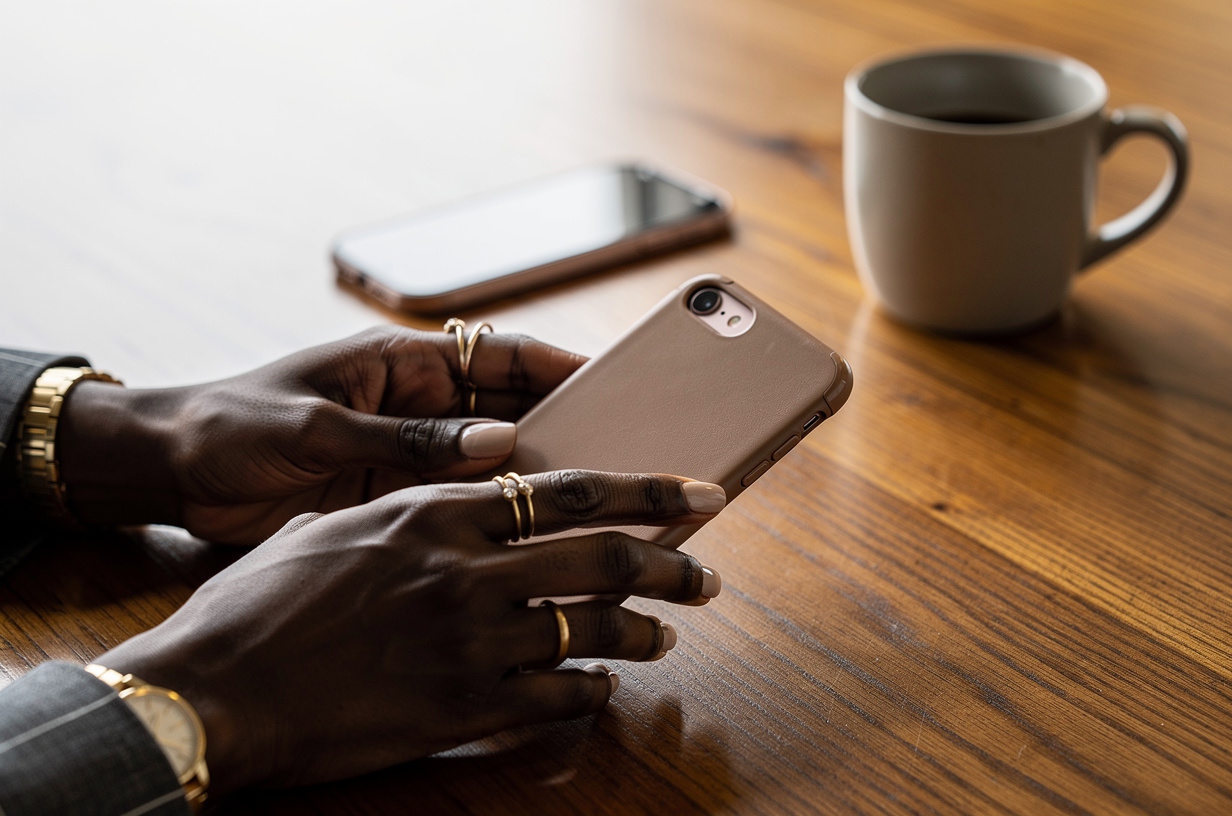
So the honest version: what you rely on does not report where your phone is, it reports where your phone was the last time somebody looked. That is not nothing, and it is not what you have been picturing at two in the afternoon on a Tuesday. 🪞
I see this constantly, and the pattern is always the same shape: a capable person carrying several systems that were never switched on — all of them costing something, none of them doing anything, maintained entirely by a feeling. 💅🏾
Three questions that find the gap
1️⃣ Open your settings and find the one that says your device can be found. Is it on? Is there a second device signed into the same account — and can you name the last time you actually used it? If the answer is you are not sure, that is the answer. 📋
2️⃣ Ask what happens if your phone is stolen rather than misplaced. There is a difference between the two, it starts with what the device shows before anyone touches it, and almost nobody has worked out which one they are protecting against.
3️⃣ Ask what would have to be true, physically, for this to work on a day you are relying on it. Charged. In range. Signed into an account you can reach from a different device. Most of us have never checked whether we could get back into our own account from a laptop we have not touched in a year. 💌
And underneath all three: if you lost your phone tomorrow, what is the first thing you would do, and how long would it take? If the honest answer is that you would ring it from a borrowed phone and wait, then the system is not on. Not partially. On or off, and right now it is off. 🌿
And there is a version of this underneath the phone. The password manager you never finished moving into. The second email address that exists but was never used. The recovery phrase on a card you are fairly sure is in a drawer. Every one is a receipt, carried as though it were coverage.
The three moves
Not a security project. Not a weekend. Three moves, one sitting, about twenty minutes.
One. Turn it on properly. That means the sign-in, the recovery route that is not this device, the permission, and the confirmation. Do it while you are comfortable and the network is good, because the version of you who needs it will be neither of those things. 🔐
Two. Check it from the outside. Sign in from a browser you do not normally use and read the device list. Delete anything you cannot identify, because a list you have never read is not a list — it is a rumour. Most people find one entry they cannot explain. 🧹
Three. Make it report to a person instead of a feeling. One line in your calendar, once a quarter, twenty minutes: is it on, is it signed into a second device, does it still report live, does the battery clause still apply. That is the whole maintenance schedule. 📦
Then do the unglamorous half. Write down — somewhere you will find without your phone — which account it is, what the recovery route is, and who you would call first. A recovery system you cannot reach at the moment your phone is gone is not a recovery system. It is a habit you used to have. 💐
What it feels like once it's true
Here is the part nobody expects. Nothing happens. You do not become a safer person. Your phone does not stop turning up in the jacket from September, because that was never what this was for. 📱
What changes is narrower and much better. The panic shrinks from an afternoon to about a minute, and that minute gets spent on one clear action instead of thirty minutes of dialling and hoping. That is worth considerably more than the four purchases you were about to make instead. 🧰
The value was never in the device. It was in knowing that at the moment it matters, one of your own systems will still be holding your name.
The takeaway
Today: turn it on from a laptop, not from the phone. Confirm a second route in. Then check that somebody else can find it from their own device. Twenty minutes, and it is the cheapest risk reduction available to you — an embarrassing sentence to have to write, given how many people paid for a tracker instead. 🗂️
You already bought the coverage. You just never switched it on. Don't get it twisted. 💅🏾