The contract exists on your desktop. It also exists as an email attachment from three weeks ago. It's in the shared folder too, probably, unless that's an older draft. And there's a version you texted yourself once from your phone, for reasons you no longer remember. Four copies. You are not entirely sure which one is current.
This isn't disorganization in the way it feels like disorganization. It's the natural result of a document traveling through every channel it needed to travel through — email to send it, desktop to edit it, shared folder to collaborate on it, phone because you needed it in a hurry once — with nothing designating any single copy as the one that actually counts. 📁
Four copies of a file isn't four backups. It's four separate chances to work from the wrong one.
Why more copies feels safer even when it isn't
There's a real instinct driving this one, and it's not wrong exactly: more copies does mean less risk of losing the file entirely. The mistake is assuming that's the only risk that matters. Losing a file completely is rare. Working confidently from the wrong version of one you didn't actually lose happens constantly, quietly, and almost never gets traced back to its actual cause. A single source of truth isn't a filing preference. It's the difference between a fact and a guess dressed up as a fact.

I see this exact pattern in client systems more than almost anything else — not too little backup, but too little agreement about which backup is real. The fix was never fewer copies. It's one clearly marked truth, with everything else demoted to what it actually is: a visitor, not a second home.
Why this feels like thoroughness and isn't
Because having the file in multiple places feels safer than having it in one — more copies, less risk of losing it entirely. And that instinct isn't wrong exactly. The problem isn't having copies. It's having copies that all quietly claim to be current when only one of them actually is, with nothing in the file names or the folders themselves telling you which.
The real cost shows up at the worst moment: you make an edit on the desktop version, forget to update the shared folder, and a collaborator works off the outdated copy for two days before anyone notices the mismatch. Or you send a client the version from your email instead of the one with last week's correction, and now there's a factual error live in something they've already signed. None of that happened because anyone was careless. It happened because nothing in the system said which copy was the real one.
The confusion compounds fastest with anything collaborative — a proposal that goes back and forth with a client, a contract that gets marked up twice before signing. Each round adds another copy to the pile, and by round three, even the person who's been editing it the whole time has to stop and think about which version has the latest change. That hesitation, multiplied across every document that gets revised more than once, is its own quiet tax on every collaboration you run.
The one-home rule
Pick a single home for anything that matters — one shared folder, one cloud drive, whatever you already have — and make every other copy a temporary visitor, not a resident. Email it when you need to send it, but the folder version is still the truth. Text it to yourself in an emergency, but delete that copy once you're back at a real device, instead of letting it quietly become a fifth permanent home nobody's tracking.
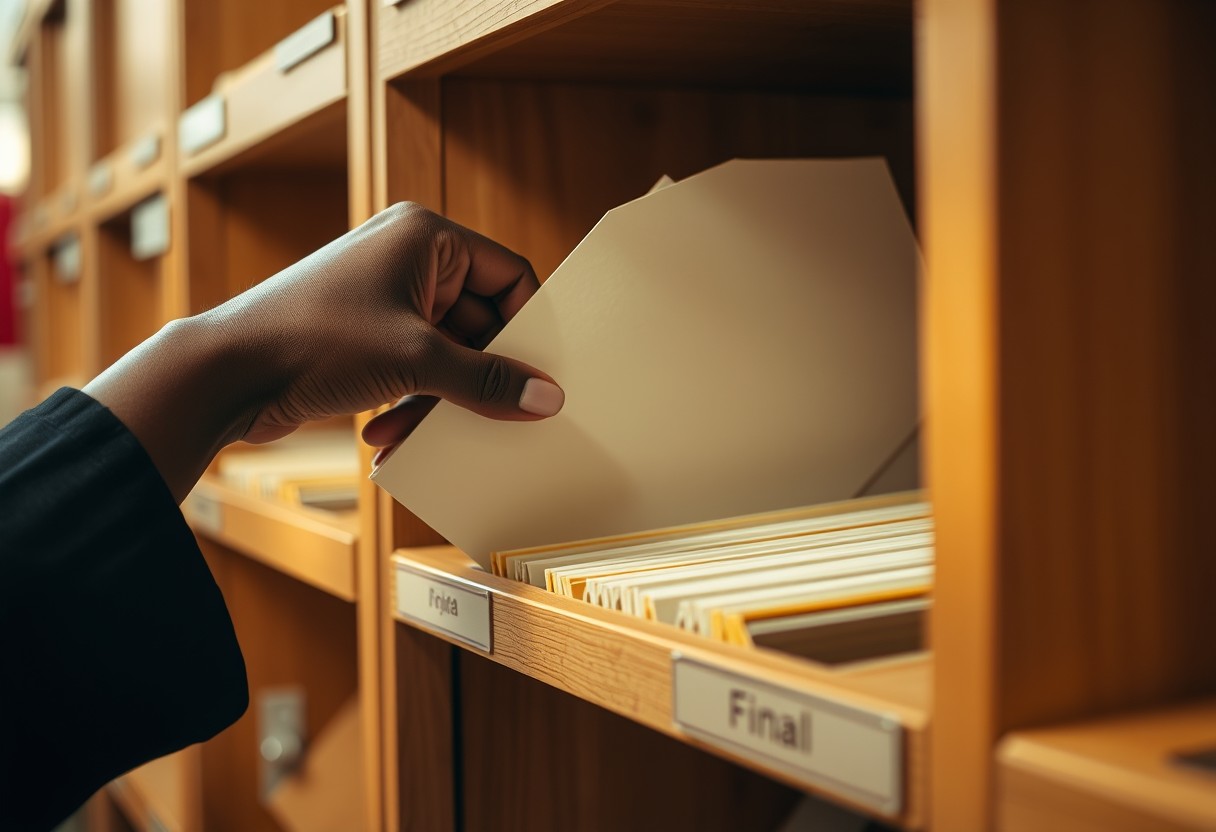
Name the file so the version is obvious at a glance — a date, not "final" or "final_final," because "final" stops meaning anything the second a third "final" shows up. A date sorts itself and tells the truth even six months later, when you no longer remember which "final" actually was. 🗂️
And when you finish an edit, update it in the one home immediately, not "later today." The gap between editing and updating the real copy is exactly where the four-version problem gets born — a five-second habit, done consistently, is the entire fix, and it's a much smaller habit than the mess it prevents.
If you share files with anyone else — a collaborator, a client, a family member — tell them where the one home is too, out loud, not just in your own head. A single source of truth only works if everyone touching the file agrees on where it lives. One person quietly keeping their own "real" copy on the side undoes the whole system just as fast as not having one at all.
Start with the one file that would genuinely hurt if the wrong version got used — a contract, a pricing sheet, a client agreement — rather than trying to fix your entire file system in a weekend. One correctly homed, clearly dated file is worth more than a vague intention to eventually organize everything, and it's the version of this fix that actually survives past the first week.
The two-day mistake, made visible
Picture the version of this that already happened somewhere in your business this year, quietly, without anyone naming it out loud: someone worked from the wrong file for two days before the mismatch surfaced. Nobody was careless. The system just never told them which copy to trust, so they trusted the one in front of them, reasonably, and it happened to be wrong.
That's the actual cost worth calculating — not in dramatic terms, but in ordinary ones. How many small, silent mismatches like that have already happened this year, gone unnoticed, and quietly cost you time nobody added up? Most businesses never find out, because a quiet mismatch rarely announces itself as the reason something went wrong.
It's worth naming the trust cost too, not just the time cost: once a collaborator gets burned working from the wrong version once, they start double-checking everything you send them, every time, indefinitely — which is its own quiet tax, paid in slower turnaround and a little less confidence in every file that follows.
A single source of truth doesn't just prevent the next mix-up. It rebuilds the kind of trust that lets people take your file at face value again, without the extra step of wondering whether it's really the current one.
The takeaway
You don't need fewer copies of your files. You need one of them to actually be the truth, and a habit that keeps it that way. Pick the home this week, and start dating your file names. 🤍