
People expect a systems review to start with a list of apps. Which CRM, which invoicing tool, which calendar app — as if the problem is always going to be a piece of software doing its job badly. Most of the time it isn't. Most of the time the software is fine. The calendar is the tell. 🗓️
Before I look at a single tool, I ask to see a real week — not the plan for next week, the actual record of what happened last week, meeting by meeting, gap by gap. That week tells me more about where a system is actually breaking than any tool review could, because the calendar doesn't lie the way a description of "how things generally work around here" tends to.
Software tells you what somebody built. A calendar tells you what actually happened. Those are two different documents, and only one of them is honest.
Why I never start with the tools
Founders expect me to ask for logins first. I understand why — that's what most technical reviews look like, a checklist of software, credential by credential. But a login only tells you what a tool is capable of. It says nothing about whether the tool is actually being used the way it was designed to be, by a business that's had time to build real habits around it instead of just turning it on and hoping. That's not a knock on the owner. It's just what happens when nobody's ever handed you a mirror that honest before.
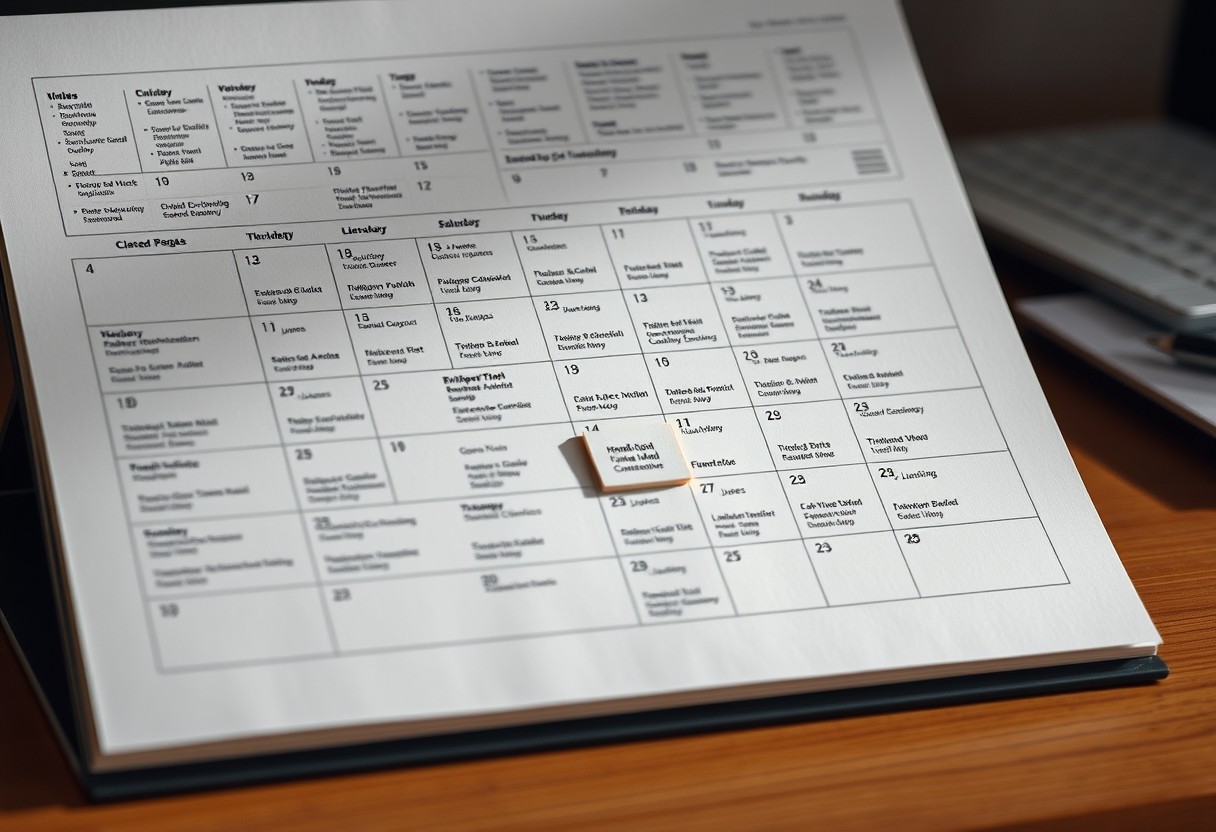
A calendar can't be gamed the way a description of "how we work" can. Nobody curates their actual week in advance for a stranger to review it. It just sits there, already true, which makes it the single most honest document in the entire business — more honest than the org chart, more honest than the process doc nobody's updated in a year, more honest, often, than the owner's own account of how her time gets spent.
What the pattern actually reveals
The first thing I'm looking for is who's setting the agenda — literally, whose meetings are on there, and how many of them exist because somebody else asked for them versus how many exist because the calendar's owner protected time for her own priorities. A calendar that's ninety percent other people's requests isn't a scheduling problem. It's a visibility problem wearing a scheduling costume — nobody built a system that lets her own work compete for the same protection everyone else's requests get automatically.
The second thing is where the same task shows up more than once, in slightly different forms, on different days — a sign that something's being redone instead of finished, usually because whatever produced it the first time didn't actually save the work anywhere retrievable. That's not a discipline issue. That's a missing system, showing up as a repeated block of time nobody's questioned yet.
And the third is the gaps — not the empty ones, the fragmented ones. Fifteen minutes here, twenty there, never quite enough to start anything real, just enough to check something and lose the thread. A calendar full of fragments instead of blocks is usually the clearest sign that whatever's driving the schedule is reactive, not designed — responding to whatever came in last, rather than protecting what actually needs to get done.
One more thing the calendar reveals, quietly: how much of the week is spent explaining status instead of doing the work the status is about. A recurring "quick check-in" that's really a status report, a meeting whose only real content is "where are we on this," repeated weekly because nothing's tracking the answer anywhere else. Those meetings aren't the founder's fault for scheduling them — they're evidence that no other system is currently answering that question, so a person has to, out loud, on a recurring basis.

Why this comes before the software
Because handing someone a more powerful tool for a broken pattern just makes the pattern faster. A better calendar app doesn't fix a calendar that's ninety percent other people's requests — it just makes it easier to accept them. The tool was never the gap. The pattern the tool is being used to run was.
So the calendar comes first, always, before a single login gets requested. It's the cheapest, fastest, most honest diagnostic available, and it usually tells me exactly which of the actual systems — scheduling, delegation, priority-setting — needs attention before we talk about anything with a subscription fee attached. 📊
This is also why a scan can start producing real clarity before a single new tool gets installed. Naming the pattern — ninety percent reactive, or a task repeating in three forms, or a week made of fragments — is itself useful information, independent of whatever gets built to fix it. Most founders leave that first conversation already seeing their own week differently, before a single line of automation exists yet.
The calendar also tells me something about sequencing — which system to fix first when there's more than one gap. A week that's mostly fragments points toward a delegation or filtering problem before a scheduling tool problem; a week that's mostly other people's requests points toward a visibility problem before anything else. Reading the pattern first means the build that follows solves the actual bottleneck instead of the first thing that happened to be visible.
What your own calendar would tell a stranger
Try this the way I would: pull up your actual last week, not your plan for next week, and read it the way someone who's never met you would. What would they conclude about who's actually setting the agenda in your business? About what keeps getting redone? About how much of the week is fragments instead of real blocks of protected time?
Most people flinch a little at this exercise, and that flinch is useful information. It usually means the calendar is telling a truer story than the one you'd have told out loud, unprompted — which is exactly why I start there, every time, before a single tool gets discussed.
It's worth adding one more layer to this, because it's the one clients are usually most surprised by: the calendar doesn't just reveal what's broken. It reveals what's already working, quietly, without credit — the block that always gets protected, the meeting that always delivers real value. Those deserve to be named and kept exactly as they are, not swept up into a redesign that fixes what's broken and accidentally disturbs what wasn't.
A good systems read isn't just subtraction. It's knowing precisely which parts of the current pattern are already doing their job well enough to leave alone.
The takeaway
Before you buy the next tool, look at last week's calendar the way an outsider would. Whose requests are actually on there? What's repeating that shouldn't be? Where are the fragments instead of the blocks? The answer is usually the real starting point — not a new app. 🤍
Want someone else to read your calendar the way I just described? Start here: Discover