
You hadn't even set your purse down. Your coat was still on one arm when your mother came around the corner holding her phone out in front of her like it had done something to her personally. "It's doing that thing again." Your uncle is already calling from the den about the television. And your auntie would like to know, since you're here, why her email is asking for a password she has never in her life had. 🍽️
You came for the mac and cheese. By the time the plates are cleared you've reset two passwords, brought a printer back from the dead and explained, gently, for the third time this year, that the nice man who called was not from the bank. You'll drive home with a plate wrapped in foil and the particular tiredness of having worked a shift nobody scheduled.
You are the family IT department. You didn't apply. There was no interview. At some point you fixed one thing quickly and without sighing, and the position has been yours ever since.
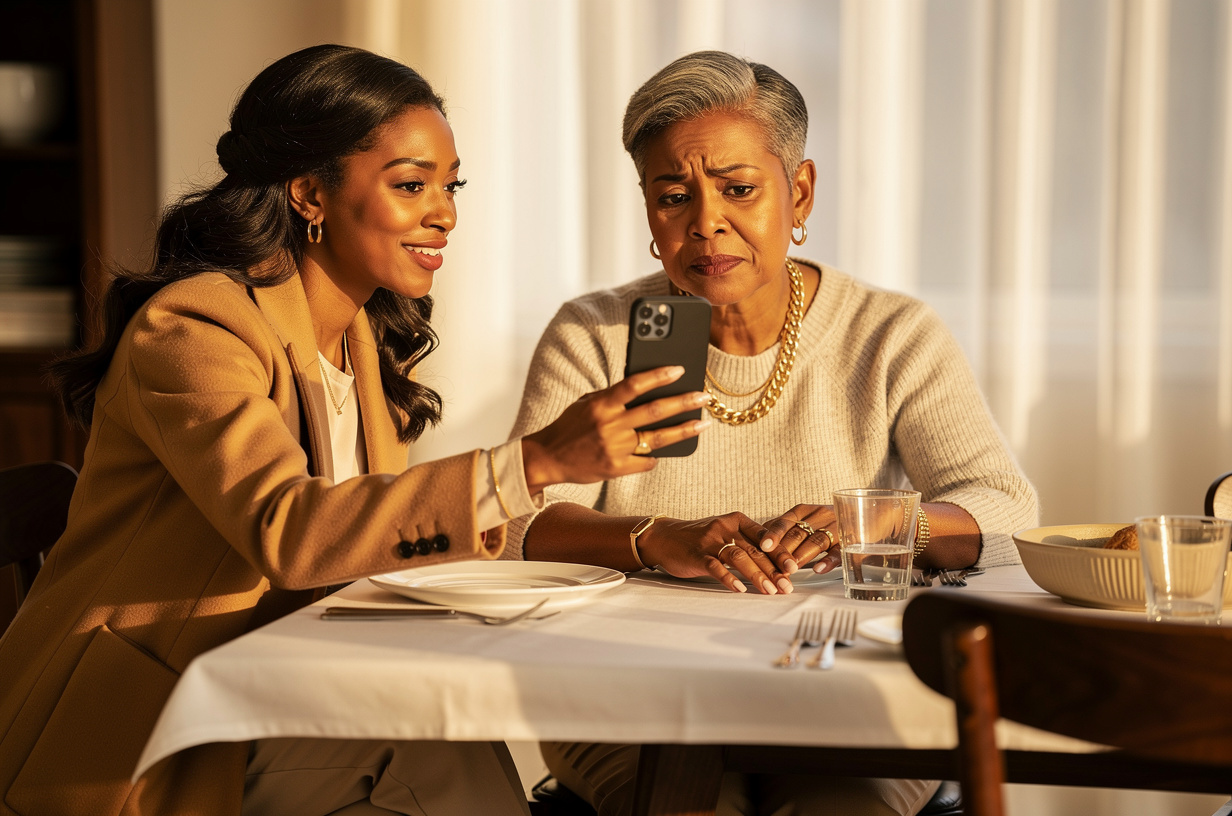
How the job found you
It happens the same way in almost every family. One person is a little more comfortable with the settings menu, and a little more patient about it, and those two qualities together are rare enough that everybody notices. Now every confusing screen in three households has the same solution, and the solution is your name.
Nobody means any harm. It's love, honestly — they trust you with the things that scare them. But look at the mechanism, because it's the same one I see inside businesses every week: when the knowledge lives in one person, every problem has to wait for that person. Your mother's phone stays broken until Sunday. Your auntie stays locked out until you call back. They've lost a bit of their own independence, and you've picked up a second job.
And for a lot of us there's a layer under that. We are the daughters who were raised to be useful. Being needed is how we were taught to belong, so saying "I can't look at it right now" lands in the body like saying "I don't care about you." Which is how you end up on the phone at 9:40 on a work night, walking somebody through a login screen you can't see, describing a button by its color. 😮💨
Being the one who knows is love. Being the only one who knows is a single point of failure with your face on it.
What it's really costing
The time is the obvious part. The quieter cost is that nothing ever gets solved. It gets rescued. You reset the password, and since nobody wrote it down anywhere safe, you'll reset it again in six weeks. You fix the setting, and the next update moves it. You're not maintaining a system. You're answering the same five calls on rotation.
There's a real risk tucked inside that, too. The people who call you are the same people those "your account has been suspended" messages are written for. If the family's whole plan is "ask her," then the plan has a gap exactly the size of the hours you're asleep, or in a meeting, or on a plane. Scammers do their best work in that gap, and they are counting on you being unreachable.

And notice what it does to the visits themselves. When every one opens with a device in your hand, you start to brace on the drive over. They start to save things up, a little embarrassed, apologizing before they ask. Two people who love each other end up having the same slightly tense conversation about a password, when what both of them wanted was to sit down and talk.
I see this constantly, and I'll say what I say to clients: a setup that only works when one specific woman is available isn't a setup. It's a favor, renewed weekly.
Build the family a system, not a hotline
You don't have to quit. I'm not going to tell you to stop helping your mother. I have sense. What changes is the shape of the help: less emergency, more infrastructure. A few things, set up once.
First, a shared password manager with a family plan. One sitting, one afternoon, everybody's important logins saved into a vault each person can open with a single strong password or a fingerprint. Many of them let you name a trusted person who can get in if something happens. That alone retires about half your calls, and it's one of the most protective things you can do for a parent's accounts.
Second, a one-page sheet, on actual paper, taped inside a kitchen cabinet. In big print: how to restart the phone, the tablet and the wifi. How to make the text larger. And one rule in bold — nobody from a bank, a store or the government will ever call and ask for a code. If someone does, hang up and call me. Paper never needs an update, and it's there when you're not.
Third, set up remote help before you need it. Many phones and computers have a way to share the screen with someone you trust. Turn it on together, practice it once while you're sitting in the same room, and the next "it's doing that thing" becomes a five-minute look instead of a forty-minute description.
Fourth, and this is the one that feels impossible until you do it: office hours. "I do tech after dinner on Sundays, and I'll look at anything you've got." Say it warmly and hold it. An emergency is still an emergency, and you'll know one when you hear it. Everything else can wait for Sunday, and you'll be amazed how many problems quietly resolve themselves by then.
And when you do help, narrate it. Hand the phone back and let them press the buttons while you say the steps. It's slower today. It's also the only version of this where the calls ever get fewer.
None of this is about doing less for them. It's about moving the help out of your memory and into things that stay in the house when you leave — a vault, a sheet of paper, a button they know how to press. That's the difference between being their support and being their only option.
So ask yourself: if you were unreachable for two weeks, what would happen to the people who rely on you — and is that a plan, or just a hope?
The takeaway
This Sunday, pick one: the paper sheet, the password vault or the screen-sharing practice run. Just one, done all the way through, while the food is still warm. It will buy back more of your evenings than any amount of patience ever has.
A soft life includes the people you love being able to stand a little steadier without you holding them up. That's not pulling away from your family. That's taking care of them in a way that lasts longer than a phone call.
Go get your plate. The printer can wait until after dessert. 🥧
Want systems this calm for your own work and home? Start here: Discover