
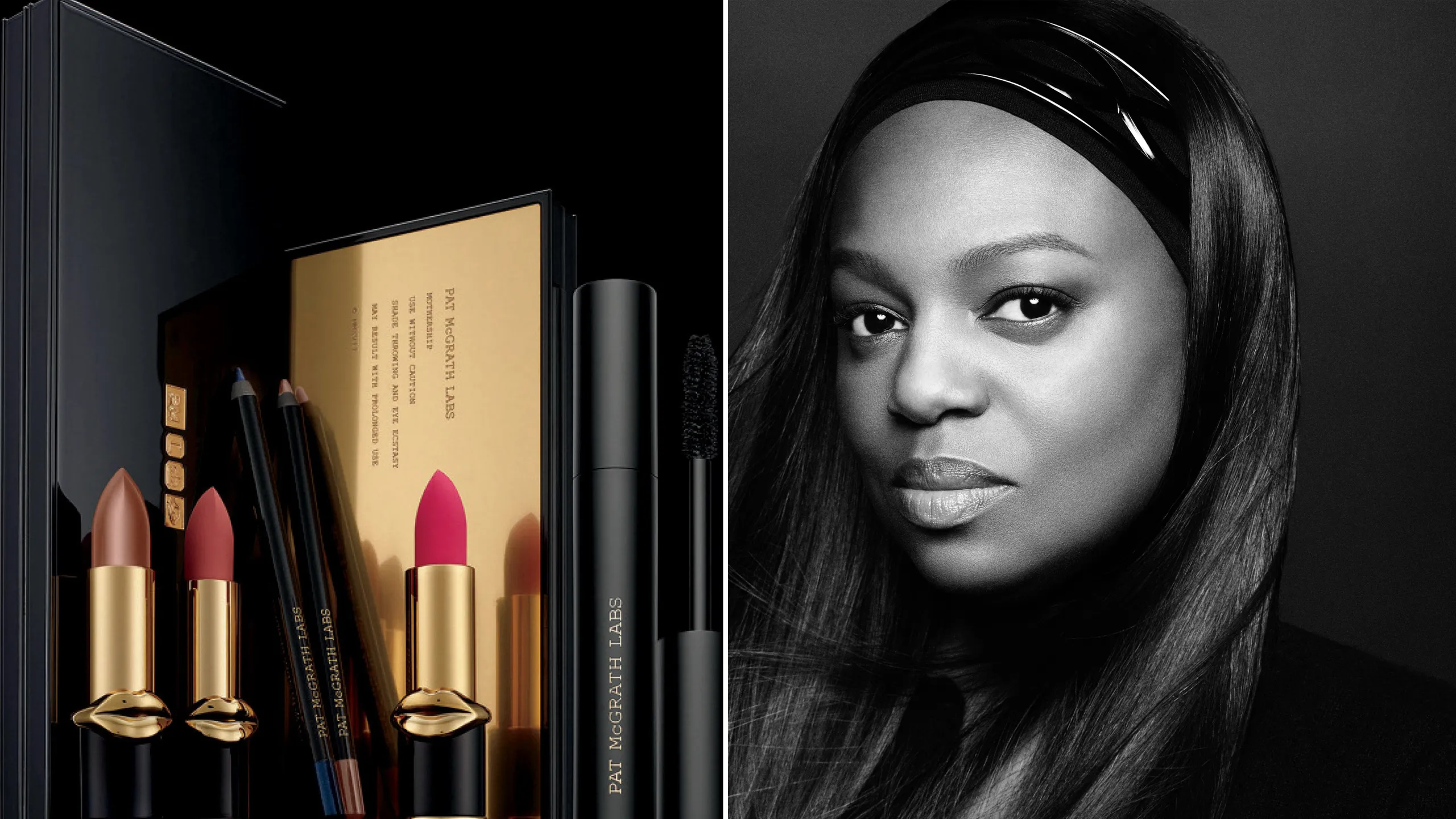
Pat McGrath is, by Vogue's own description, the most influential makeup artist alive — the woman who reshaped the entire beauty industry from backstage, three decades before she ever put her own name on a product.
When Pat McGrath Labs launched in 2015, it wasn't a celebrity vanity line. It was an artist finally selling the vision everyone had already been buying from her indirectly, for years.
By 2018, private equity firm Eurazeo Brands invested roughly $60 million for a 5-6% equity stake — pricing the brand north of $1 billion. A Black woman-founded beauty label hitting unicorn status wasn't just a headline. It was proof of concept for an entire category of artist-led, drop-driven beauty brands.

The name recognition was real. The demand was real. What wasn't there was the infrastructure to convert either one into a business that could survive a downturn.
By 2024, Eurazeo's own reporting had written the stake down roughly 88%, implying a valuation closer to $150 million. In January 2026, Pat McGrath Labs filed for Chapter 11, reporting estimated annual sales near $50 million, and secured $30 million in court-approved financing from GDA Luma just to keep the lights on through restructuring.
A drop-driven beauty brand lives and dies by a specific kind of forecasting risk that a $1 billion price tag doesn't erase — every limited release is a bet on exactly how much product to make, and getting that bet wrong in either direction is expensive.
Sell out in an hour and you've left real revenue on the table along with a customer base that starts to resent never being able to actually buy the thing. Overproduce for a drop that doesn't move and the inventory sits on a balance sheet as a liability, quietly, until someone has to explain it in a board meeting. Neither failure mode announces itself the week it happens. Both compound, quarter over quarter, until an 88% write-down is just math finally catching up to a pattern nobody was tracking in real time.
This wasn't a brand that lost relevance overnight, or a founder who lost her eye. Pat McGrath is still the same visionary who spent thirty years earning her name. What buckled was everything underneath the name.
The Questions I Would Have Asked Pat
1️⃣ When a valuation gets set at the height of a hype cycle, who's tracking whether the actual revenue is keeping pace with it — and which system actually holds that data, so it can be audited instead of living in one person's control?
2️⃣ Homegirl, does your inventory system know the difference between a sold-out drop and a drop that's about to sit in a warehouse for a year — and can it get that difference in front of the people who need it, on its own?
3️⃣ If your burn rate crossed a dangerous line this quarter, would you know this week — or would you find out from a headline? Is there an automated trigger watching that marker, or is someone just supposed to notice?
4️⃣ How much visibility do your equity partners actually have between formal reporting periods — and how much of an 88% write-down happens quietly, in a room you weren't in?
5️⃣ On a scale from soft life to survival mode, how much of a $1B number was ever actually about the operations underneath it?
The Baddie Stack Prescription 💅🏾📱⌨️
📉 Real-time valuation-to-revenue tracking. A dashboard connecting actual sales performance directly to the numbers used in every funding conversation, so a valuation never gets more than a year or two ahead of what the business can actually prove — and nobody finds out the gap existed from a write-down instead of a weekly report.
🏭 Drop-cycle demand forecasting. Automated inventory modeling built specifically for a brand that runs on limited, hype-driven releases — pulling in pre-order signals, past sell-through rates, and social demand data to set production numbers before manufacturing, not after a drop has already sold out or stalled.
💰 Connected runway and burn monitoring. Financial systems that flag burn rate against cash reserves automatically, months before restructuring becomes the only option left on the table, so the warning shows up as a number on a dashboard instead of a letter from a court.
This breakdown can be customized with a Digital Systems Scan
A billion-dollar valuation is a story about potential. It was never a substitute for the infrastructure that turns potential into something that survives a hard year.
Pat McGrath built one of the most respected names in beauty out of pure talent and reputation. That's not what broke. What broke was the distance between a number set at the height of a moment and the infrastructure required to hold that number up once the moment passed.
Start with a Digital Systems Scan: Discover
Stay Savvy, Baddies 💅🏾.
Tech Baddie Out.