The text comes in at 10:47 p.m. "Hiii! How much for a two-tier, buttercream, gold drip, for 40 people, next Saturday? 🥰" And Gabrielle, who has made hundreds of cakes and could build that one with her eyes closed, sits on the couch and starts doing math from scratch. 🎂
Flour, butter, the good vanilla. The gold leaf she always runs low on. The six hours, give or take, plus the drive. Then the softer math: this one's a repeat client, she's been through a lot this year, and the last time Gabrielle quoted high, the person never wrote back. So she types a number, deletes it, types a smaller one, and hits send before she can change her mind.
Last month, two nearly identical cakes went out the door at prices sixty dollars apart. The only difference was how each conversation felt.
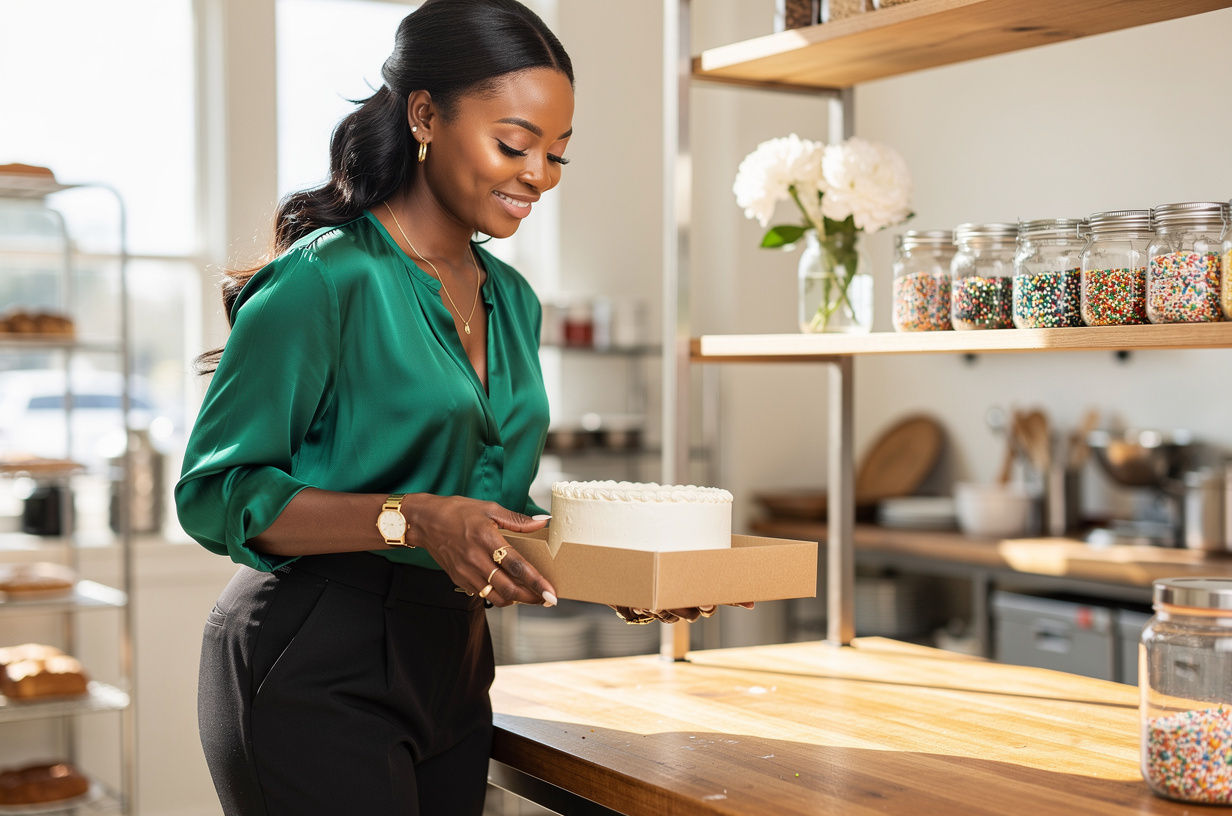
Same cake, same six hours, two different prices. The only variable was her nerve that night.
What This Actually Costs Her
Start with the money, because it's the part she's least likely to look at. When every quote is built from memory and mood, the number drifts down. It almost never drifts up. A little discount for a friend, a little shave because the client hesitated, a forgotten cost for the boxes and the boards. Over a year, that drift can quietly take a real share of her profit, on work she did beautifully.
Then the time. Every quote is a fresh twenty minutes of thinking and texting, sometimes more when the client asks follow-up questions one text at a time. Thirty quotes a month is ten hours of pricing conversations, and a lot of those people never book. That's unpaid work done at 11 p.m., after a full day on her feet.
And without consistent prices, she can't see which cakes are actually worth making. Maybe the elaborate sculpted cakes she loves are her least profitable work per hour, and the simple naked cakes she undervalues are paying her bills. She has no way to know, because no two quotes were built the same way. Every decision about what to offer, what to promote and what to stop making is a guess.
Then the confidence. Because there's no set price, every quote feels like a negotiation with her own worth. A client says "oh, that's more than I expected" and Gabrielle hears a verdict on her talent, not a comment on a number. She goes to bed replaying it.
And there's the fairness problem she doesn't like to think about. Two clients compare notes at the same party, and one of them paid sixty dollars more for the same cake. Nobody says anything to Gabrielle's face, but it doesn't feel good to anyone. Consistency is part of what makes people trust a price.
Why She Does It This Way
Ask Gabrielle and she'll say every cake is different, so every price has to be different. And she's partly right: a five-tier wedding cake and a smash cake for a first birthday are not the same job. But most of what she makes falls into a handful of patterns, and the patterns have real, knowable costs.
I see this constantly with women whose business started as a gift. Gabrielle made her niece's birthday cake, then a coworker's baby shower cake, then somebody's mother called. The early cakes were favors, priced like favors, and she never had a moment where she sat down and turned the favor into a price list. The pricing grew up as a feeling, and feelings change by the hour.
There's history underneath, too. A lot of us were raised to be generous with our gifts and careful about seeming greedy. The aunties who baked for the whole church never charged for a slice. That generosity built communities. It also left a lot of talented women unsure whether charging full price for their own craft is allowed.
It is. Pricing your work clearly is not greedy. It's what lets you keep doing it.
And when the quoting happens late at night, alone, in a text thread, there's nobody standing beside her to say: "Girl, you're charging less than your ingredients."
The Questions I Would Ask Gabrielle
1️⃣ If you priced your last ten cakes with the same rules, how much more would you have made?
2️⃣ Do you know what one hour of your time is worth after ingredients, boxes and gas?
3️⃣ How many quotes did you send last month that never turned into an order?
4️⃣ When a client hesitates at your price, what do you usually do next?
None of these questions doubt her talent. Her cakes speak for themselves. They ask whether her prices are speaking for her too, or apologizing.
Let the price list say the number. Save your warmth for the cake.
The Baddie Stack Prescription 💅🏾📱⌨️
🧮 A pricing calculator she builds once. A simple spreadsheet with her real costs: ingredients per serving, boards and boxes, her hourly rate, add-ons like gold leaf or sugar flowers, and delivery by distance. She types in the servings and the extras, and the sheet gives her the price. The math happens once, on a calm Sunday, instead of thirty times at 11 p.m. on her couch.
📝 A quote form instead of a text thread. One link, shared in her bio and her auto-reply, that asks for the date, servings, flavor, design style and budget range, with a few example cakes and their starting prices right on the page. Clients answer everything in one go, she plugs it into the calculator and sends a clean quote. No more pricing by vibe in a thread at midnight.
📅 A published minimum and a deposit to hold the date. A clear starting price, like "custom cakes start at a set amount for 20 servings," filters out the people who were never going to book, before she spends twenty minutes on them. A deposit through her booking or invoicing tool holds the Saturday and turns a maybe into a yes.
This breakdown can be customized with a Digital Systems Scan
None of this makes Gabrielle less generous. If she wants to gift a cake to her niece, she still can. The difference is that the gift becomes a choice she makes on purpose, not a discount that slips out because she was tired and unsure.
Gabrielle doesn't undercharge because she doesn't know her worth. She undercharges because she has to rediscover it from scratch every single night, alone, in a text thread. Write the price down once, and she never has to talk herself into it again. And the next time a text comes in at 10:47 p.m., she answers it with a link, puts the phone down and goes to bed.
Take the 4-minute Digital Literacy Assessment to see where your setup actually stands: Start
Then connect with me directly. I will help you put your price on paper and stand on it.
Stay Savvy, Baddies 💅🏾.
Tech Baddie Out.